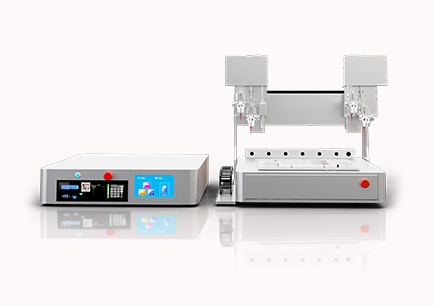
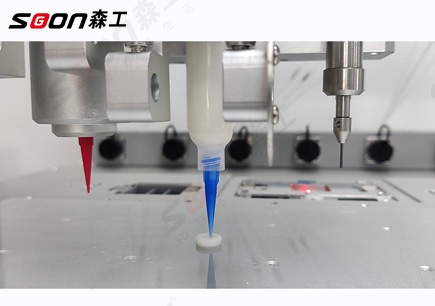
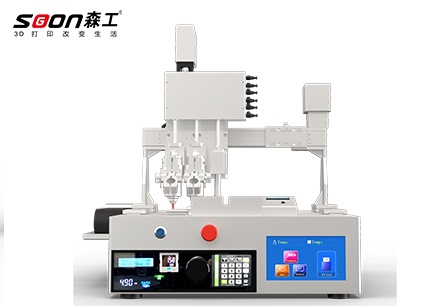
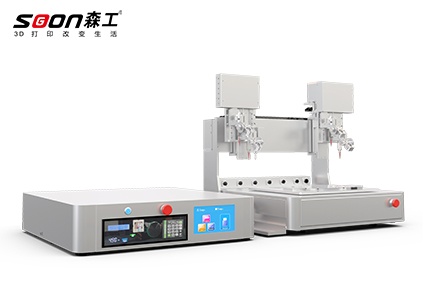
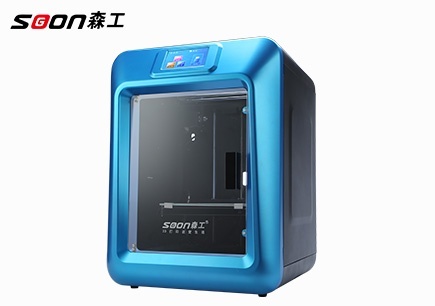
近日,北京化工大学曹鹏飞、田明、王腾教授团队在橡胶高值化回收领域取得重大突破,相关研究成果发表于国际顶级化学期刊《Journal of the American Chemical Society》(JACS,DOI:10.1021/jacs.5c20016),森工AutoBio1000DIW直写高分子材料3D打印机为该研究的 3D 打印应用环节提供了关键技术支撑!
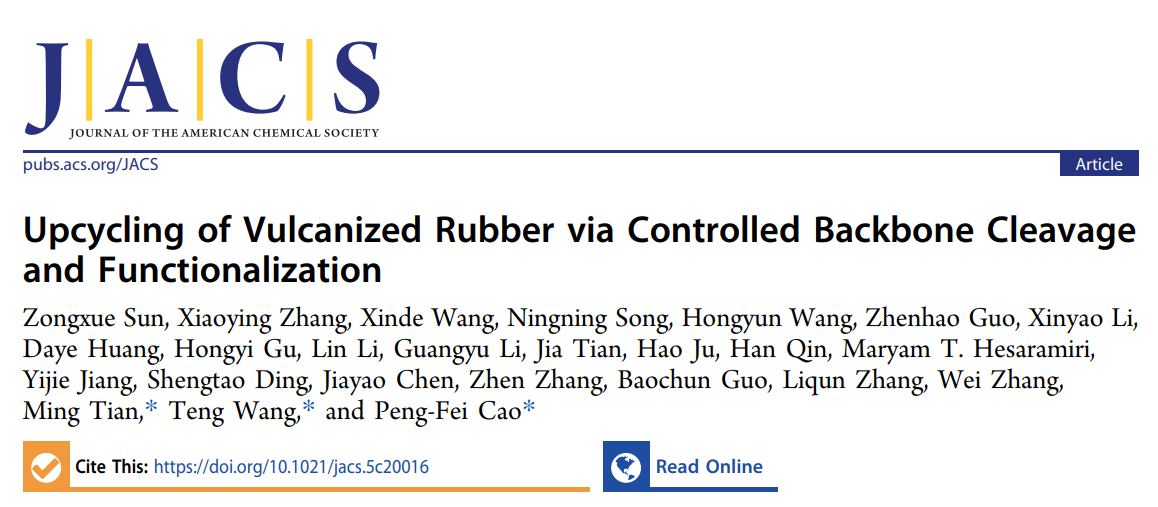
团队研发出一种温和的一步氧化法,基于 N - 羟基邻苯二甲酰亚胺(NHPI)的相调控催化体系,实现硫化橡胶主链 C=C 键的选择性裂解,对比传统热解、脱硫等回收手段,该方法从根本上解决了硫化橡胶难降解、回收产物价值低的痛点,可制备出醛基 / 羧基封端的功能化橡胶片段,产物回收率超 95%,且全程无有毒气体排放、反应条件温和(80℃、常压氧气)。
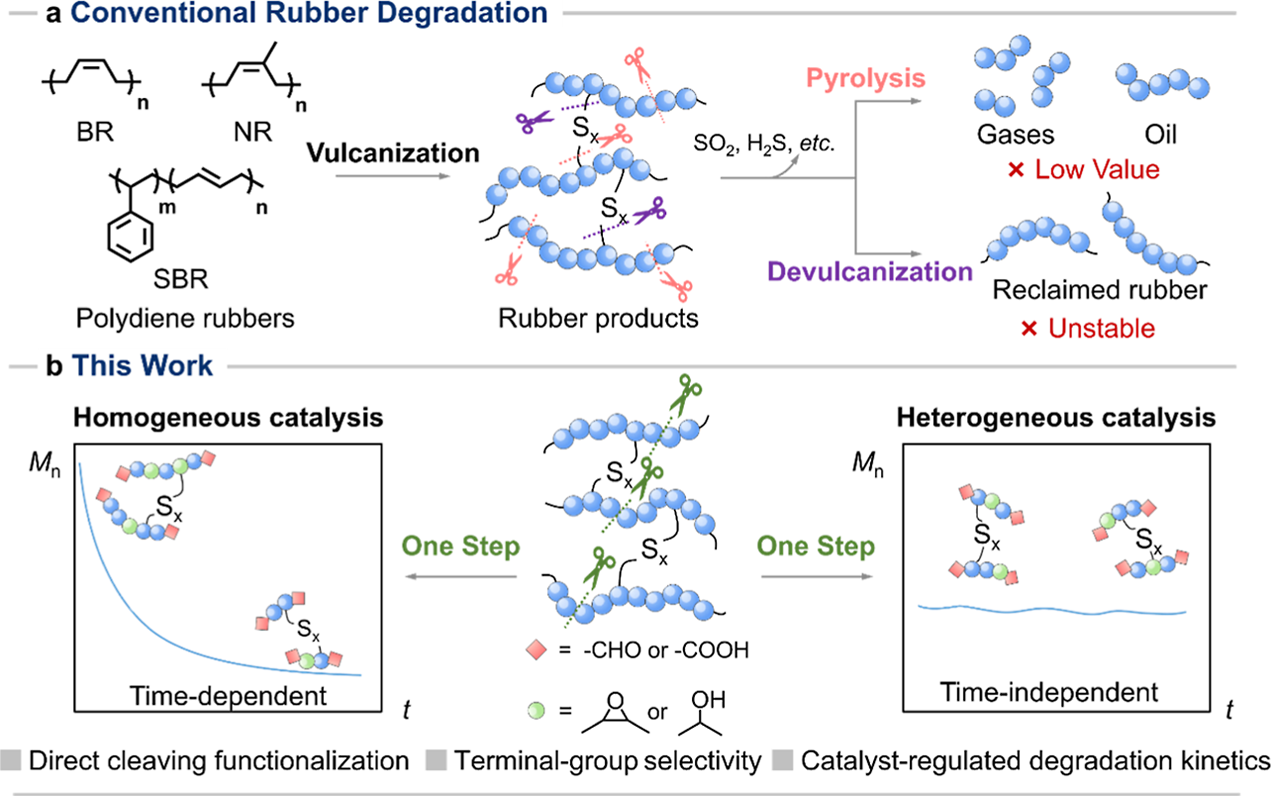
Figure 1
Recycling strategies and catalytic system design for rubber deconstruction. (a) Conventional recycling approaches such as pyrolysis and devulcanization. (b) This work: controlled deconstruction of vulcanized polydiene rubbers through direct, highly chemoselective cleavage of backbone C=C bonds, where phase-regulated catalysis enables kinetic control.
研究中,团队通过均相 / 非均相催化的相调控,实现了橡胶降解产物分子量的精准调控:均相催化下产物分子量随时间持续降低,非均相催化则通过 “洋葱剥离” 式的表面裂解,得到分子量几乎不随时间变化的产物,这一特性为后续产物的高值化应用奠定了基础。同时,该催化体系对天然橡胶(NR)、丁苯橡胶(SBR)、顺丁橡胶(BR)及硫化橡胶(VBR)均表现出优异的降解效果,醛基封端产物收率超 90%,羧基封端产物收率 65%-98%,适用性极强。
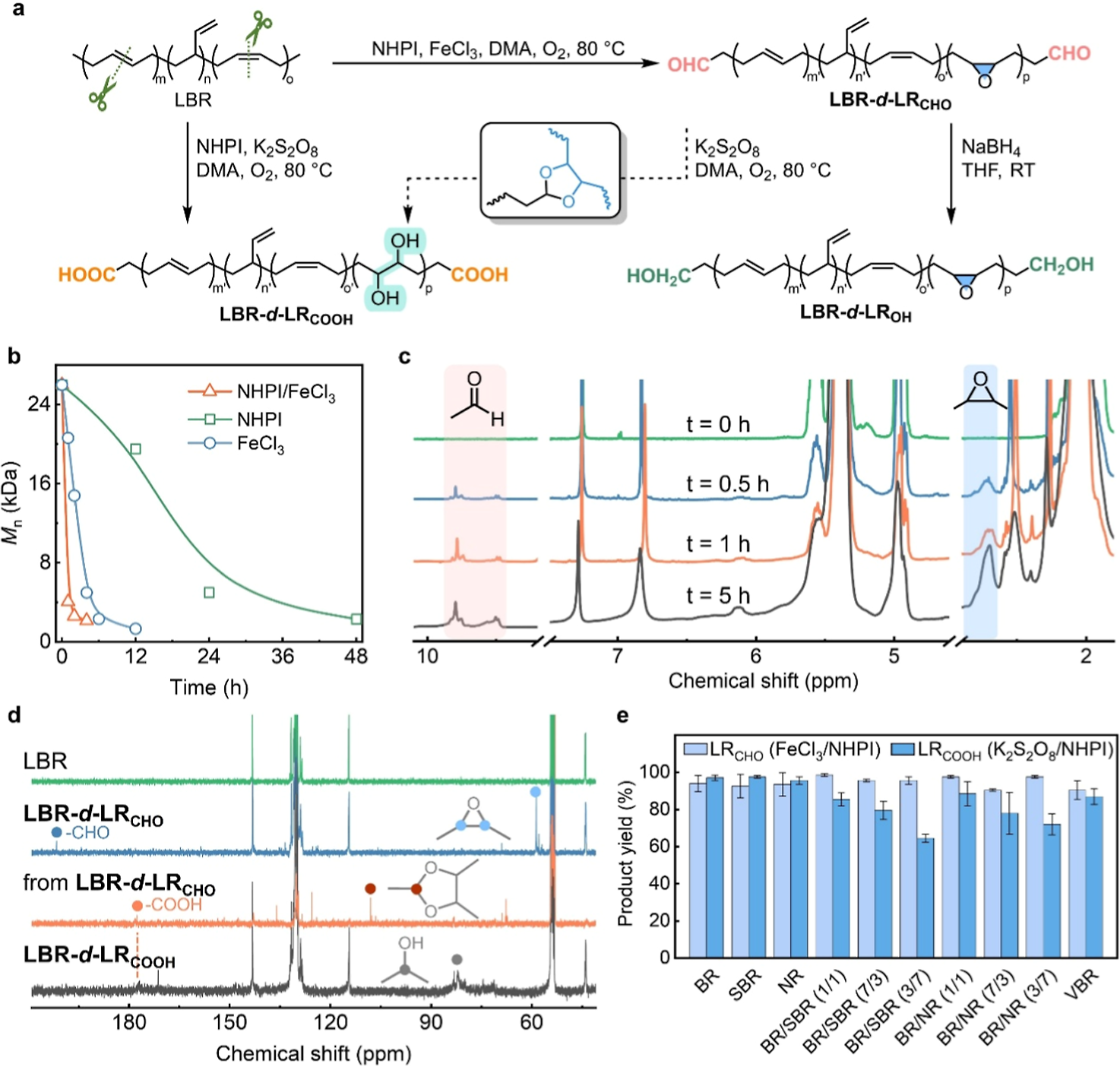
Figure 2
One-step backbone cleavage of rubber by homogeneous catalysis. (a) Oxidative cleavage of polydiene main-chain of LBR affords aldehyde- and carboxyl-terminated fragments. (b) GPC traces showing time-dependent molar-mass decline of LBR-d-LRCHO under various catalytic conditions. (c) Stacked ¹H NMR spectra confirming the incorporation of aldehyde and epoxy groups at 0.5, 1, and 5 h. (d) Stacked inverse-gated-decoupling ¹³C NMR spectra of LBR, LBR-d-LRCHO, oxidation product from LBR-d-LRCHO and LBR-d-LRCOOH to confirm acetal, polyol and carboxyl groups. (e) Recovery yields of aldehyde-terminated liquid rubbers obtained via FeCl₃/NHPI-catalyzed degradation and carboxyl-terminated liquid rubbers obtained via K₂S₂O₈/NHPI-catalyzed degradation from NR, SBR, BR, their blends, and VBR.
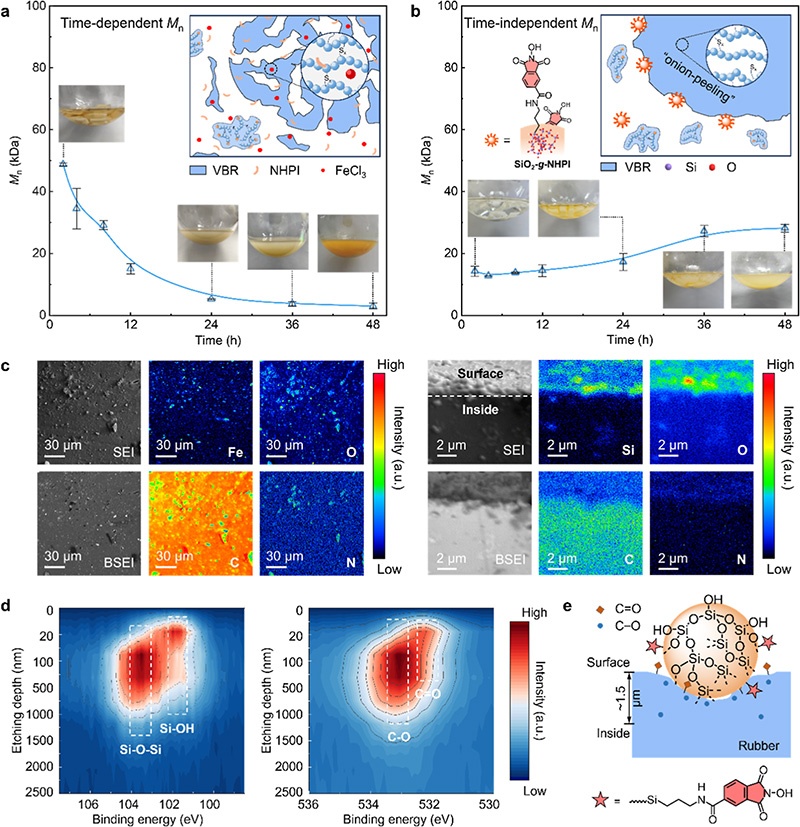
Figure 3
Phase-regulated control over degradation kinetics of vulcanized rubber. (a) Homogeneous catalysis yields progressively smaller fragments, mimicking reversed step-growth. (b) Heterogeneous catalysis confines cleavage to surfaces, producing nearly constant molar-mass products, similar to the “onion-peeling” process. (c) EPMA images of brittle fracture surfaces under homogeneous (left) and heterogeneous (right) conditions, showing distinct reaction pathways. (d) XPS depth profiling combined with ion beam etching during midstage heterogeneous catalysis reveals surface-localized oxidation. (e) Schematic of heterogeneous degradation, integrating EPMA/XPS evidence for surface-confined cleavage.
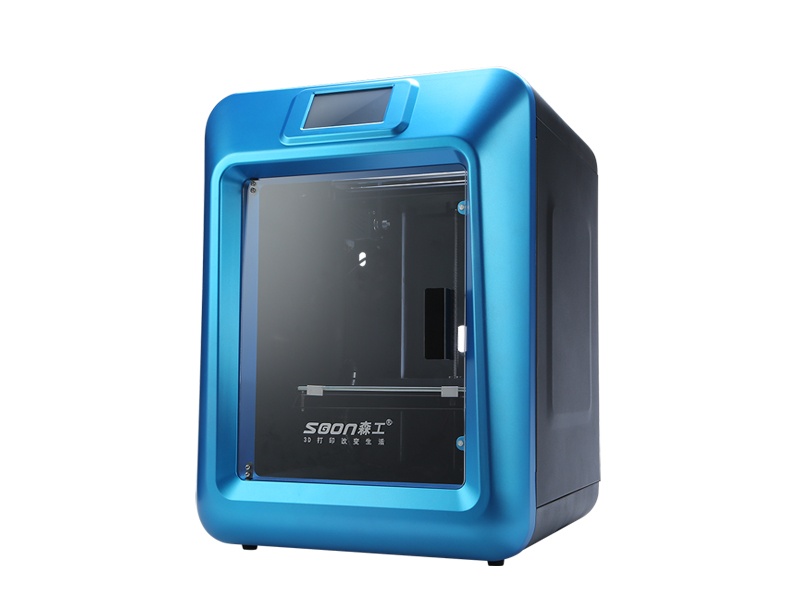
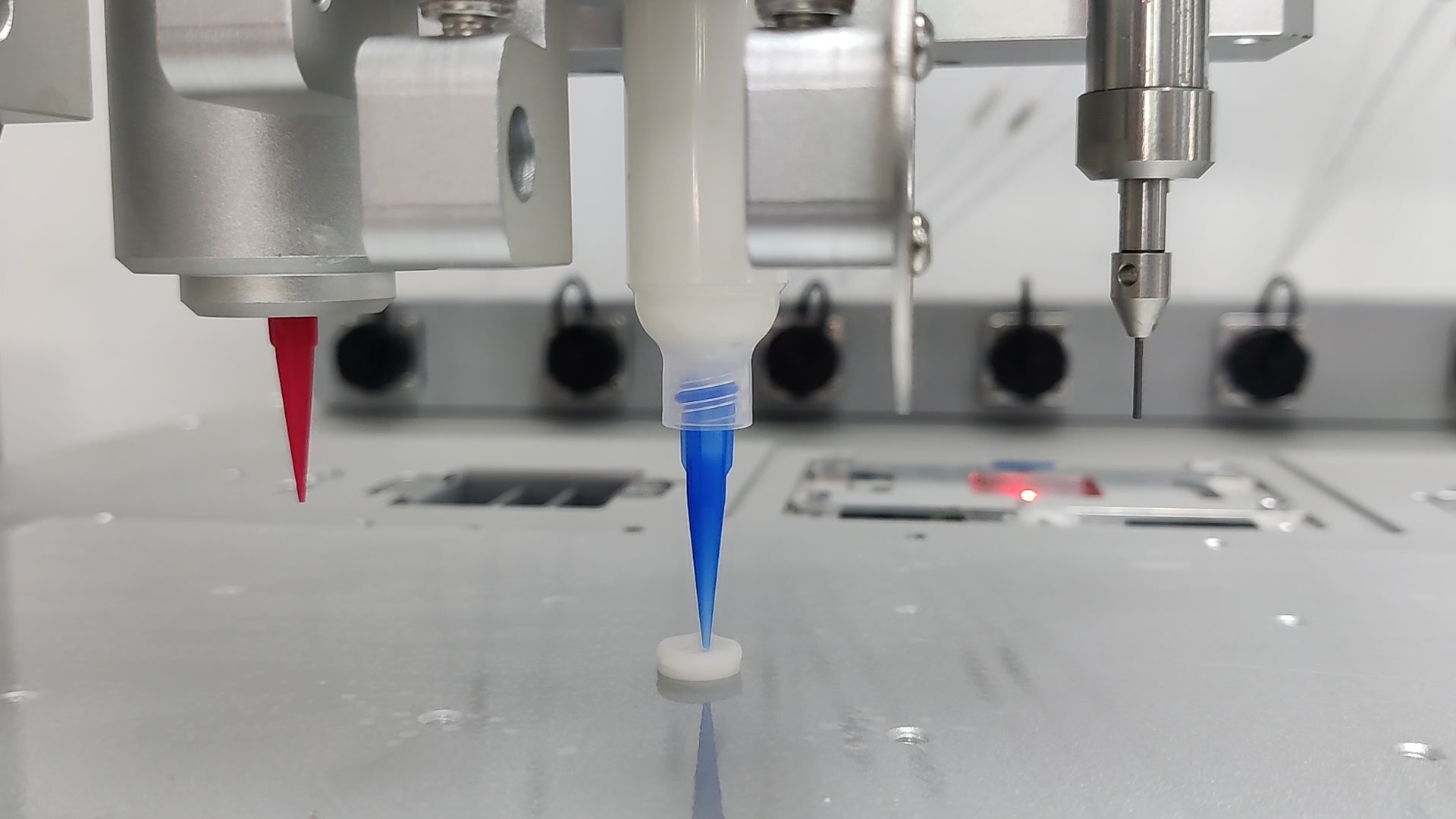
在成果转化与应用环节,森工AutoBio1000DIW直写高分子材料3D打印机凭借优异的材料适配性和成型精度,成为关键技术载体:团队将 SBR 基羧基封端橡胶片段加工为可挤出打印的油墨,通过该设备成功实现复杂几何形状弹性体的精准成型,打印制品具备优化的流变性能与机械特性,直接验证了该橡胶回收技术在 3D 打印领域的实际应用价值。此外,降解得到的功能化橡胶片段还可重构为高分子网络,制备出搭接剪切强度超 2MPa 的弹性体胶粘剂,或直接替代轮胎胎面配方中的生胶 / 增塑剂,性能达到甚至优于工业标准。
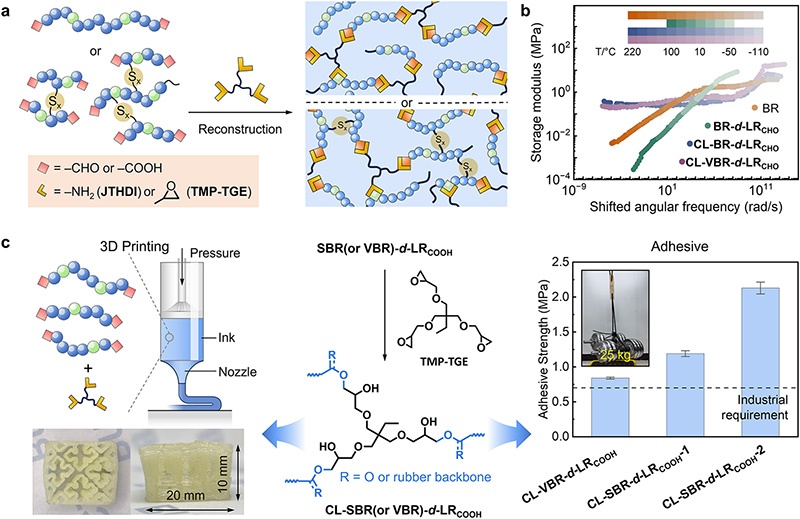
Figure 4
Reconstruction of degradation products into high-value functional materials. (a) Reconstruction of end-functionalized liquid rubber fragments into polymer networks. (b) Rheological master curves of the BR, BR-d-LRCHO, CL-BR-d-LRCHO and CL-VBR-d-LRCHO. (c) Applications based on the reconstruction of functionalized fragments. Left: 3D printing by precross-linked CL-SBR-d-LRCOOH ink. Right: Wood adhesives based on the reconstructed CL-VBR-d-LRCOOH and CL-SBR-d-LRCOOH.
该技术还成功应用于实际废旧橡胶制品的回收,对轮胎、橡胶手套等真实废橡胶的降解回收率均超 95%,且能实现钢线、炭黑等无机填料的高效分离,千克级放大实验也验证了其规模化应用潜力。
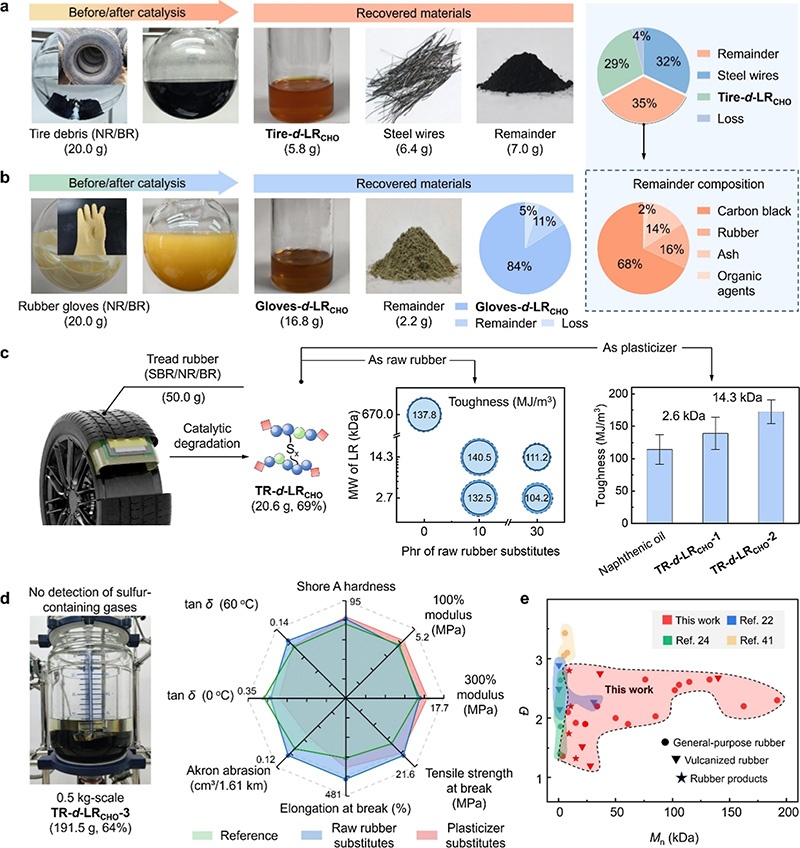
Figure 5
Scalable deconstruction of rubber products. (a,b) Waste tires and gloves, converted into functionalized liquid fragments, with simultaneous recovery of inorganic residues. (c) TR-d-LRCHO obtained from tread rubber was directly applied as a replacement for raw rubbers or plasticizers in tire tread formulations. (d) Left: pilot-scale (0.5 kg) degradation validates robustness and scalability. Right: performance comparison of industrial formulations with and without TR-d-LRCHO confirms industrial relevance. (e) Molar masses and polydispersity indices of fragments obtained from different rubbers via distinct deconstruction routes.
此次研究突破了硫化橡胶化学回收的技术瓶颈,实现了废旧橡胶的高值化、规模化循环利用,而森工AutoBio1000DIW直写高分子材料3D打印机在 3D 打印应用环节的出色表现,搭建起了橡胶回收技术与先进制造之间的桥梁,为材料循环经济与高端制造的融合发展提供了全新范例!
金刚石铜等材料能不能 BJ 打印?欢迎寄样,森工免费测试
森工科技携科研级DIW直写3D打印机及BJ粘结剂喷射3D打印机亮相中国材料大会 2026,助力新材料科研创新发展
科研3D打印的价值、工艺方向与产业化机会分析
DIW直写式3D打印技术有哪些实现材料梯度打印的方式,各有什么优势和特点?
森工科技AutoBio系列生物3D打印机专业版和旗舰版应用于科研场景该怎么选择?
直写式(DIW)陶瓷 3D 打印机:科研领域的材料创新利器